
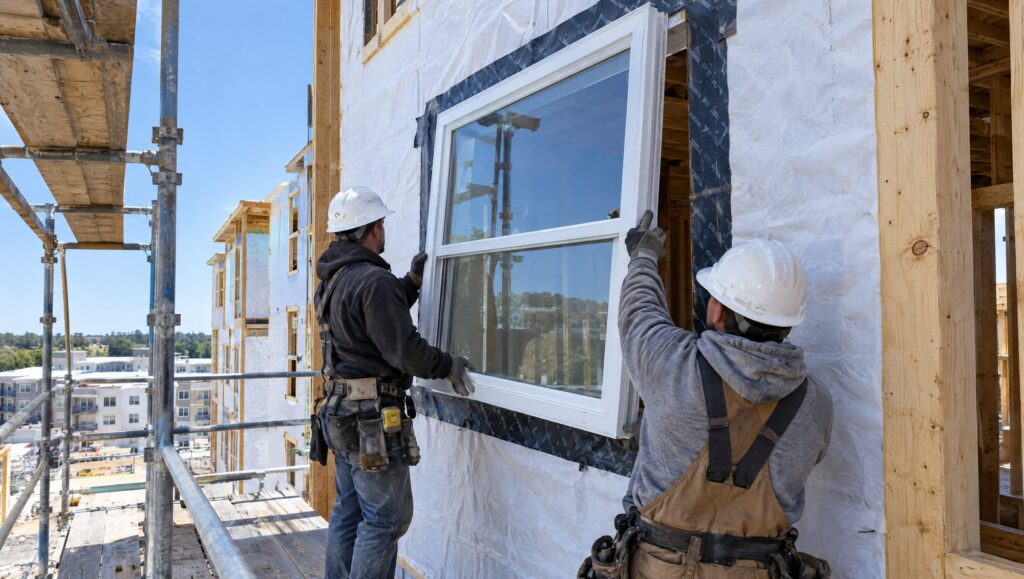
A window that’s out of level by an eighth of an inch can still look fine on the day it’s set. A few weeks later the sash drags, the lock won’t line up, and water collects at the low corner of the sill instead of draining. Shims are how installers prevent that, and on a multifamily project with hundreds of openings, how fast and how consistently a crew shims is a big part of how the job goes.
Here’s what window shims do, where they go on a new construction window, and the shimming mistakes that show up later as call-backs.
What are window shims?
Window shims are thin wedges or flat plates placed between the window frame and the rough opening to set the window plumb, level and square. They fill the gap between an imperfect opening and a frame that needs to be straight to work.
The common types:
- Tapered wood shims: inexpensive and easy to adjust in opposing pairs, but they can compress, rot or swell when they get wet.
- Plastic or composite shims: tapered or flat, moisture- and rot-resistant, and the better choice at the sill where water can reach them.
- Horseshoe (U-shaped) shims: flat plastic shims that slip around a fastener and stack to a set thickness, often used under the sill.

Why shimming matters on new construction
Rough openings in new framing are rarely perfect. Sills crown or dip, jambs lean, and lumber moves as it dries. A window fastened straight to that framing takes on its shape. Proper shimming protects:
- Operation: sashes slide and lock without binding.
- Seals: weatherstripping meets the sash evenly, so air and water ratings hold up in the field.
- Drainage: a level sill drains to the weep holes instead of pooling at one corner.
- Water tests and inspections: a racked or bowed frame is one of the most common reasons a window fails a field water test.
- Warranty: most manufacturers require the unit to be installed plumb, level and square.
Where to shim a window
Always follow the manufacturer’s installation instructions. As a general rule for a nail-fin window in new construction:
- Under the sill at each corner, directly below the jambs, where the frame carries its weight.
- Under the mullion on mulled units, so a wide sill doesn’t sag in the middle.
- Along wide sills at the spacing the instructions call for.
- At the jambs behind the lock and keeper area and at fastener points, just enough to keep the jambs straight, never forced.
- Not tight at the head. Leave the gap at the head open so the header can deflect without loading the window frame.
Do you shim the bottom of a window?
Yes. The sill is where shimming matters most, because it sets level for the whole unit. Shim at the corners and under any mullion, but don’t create a solid dam across the full width. Leave a path for water that reaches the rough opening to drain out, and use plastic shims rather than wood where they can get wet.
Are window shims necessary?
On almost every install, yes. Even a well-framed opening is rarely flat and level across its full width. Shims are what let the installer correct for that without bending the window. Skipping them, or relying on the nail fin alone to hold the window in position, is how frames end up racked.
Common shimming mistakes
- Over-shimming the jambs so the frame bows inward and the sash binds.
- Shimming the head tight, so the window takes load when the header settles.
- Wood shims at a wet sill, which can swell, rot or compress over time.
- Shims that block drainage at the sill.
- Not checking diagonals: a window can be level and plumb and still out of square.
- Loose shims that fall out before the window is fastened.
How to shim a new construction window
- Check the rough opening for size, level at the sill and plumb at the jambs before the window arrives at the opening.
- Set sill shims at the corners and under any mullion, to the height that brings the sill level.
- Set the window on the shims, centered in the opening.
- Check level, plumb and square. Measure both diagonals; they should match.
- Tack the top corners through the fin, then shim the jambs as needed.
- Operate the sash and lock before final fastening. Adjust if anything drags.
- Fasten the fin per the instructions, trim the shims flush and fill the gap with low-expansion foam where specified.
How our windows make shimming faster
Our 2100 Series windows are designed to be installation-forgiving:
- Patented Super Shim, built into the window, for fast, accurate leveling and proper alignment.
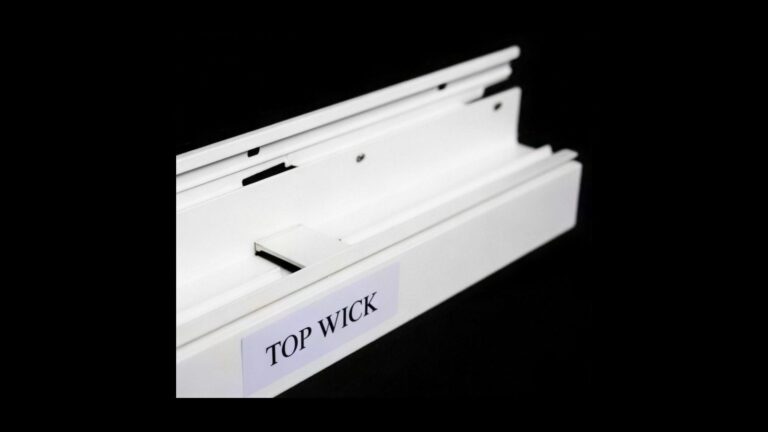
- Patented Super Wick to channel water away from the sill once the window is set.
- Additional weep holes for enhanced drainage in heavy rain.
Fewer loose parts and less adjustment at every opening adds up across a multifamily building. See the 2100 Series and how it handles water management.
Frequently asked questions
Do you shim the bottom of a window?
Yes. Shim under the sill at the corners and under any mullion to set the window level, while leaving a path for water to drain.
Are window shims necessary?
On most installs, yes. Rough openings are rarely perfectly level and plumb, and shims let you correct for that without bending the frame.
Should shims be left in after the window is installed?
Yes. Shims stay in place to support the frame. Trim them flush with the frame once the window is fastened.
Wood or plastic window shims?
Plastic or composite shims are the safer choice at the sill because they won’t rot or swell if they get wet. Wood shims work at dry jamb locations.
Should you shim the top of a window?
Generally not tight. Leave the head gap open so the header can deflect without loading the window, unless the instructions say otherwise.
Windows built to go in faster
All American Window Company designs and manufactures windows for multifamily construction in North Charleston, South Carolina. Send us your window schedule for pricing, lead times and the right products for your build.