
Every window lets a little water in. That’s not a defect, it’s the design: rain driven past the exterior seals collects in the frame and drains back out through weep holes. When the weeps work, nobody notices. When they’re blocked by stucco, paint or a bead of sealant, the water has nowhere to go but over the sill and into the wall, and that usually shows up as a failed field water test or a call-back after turnover.
Here’s how window weep holes work, why they clog on jobsites, and what to check before the water test.
What are window weep holes?
Window weep holes are small drainage openings, usually slots, on the exterior face of the bottom of the window frame. They connect to the sill track or the chambers inside the frame. Water that gets into the track flows to the weeps and drains to the outside instead of building up inside the window.
On many vinyl windows the weeps are covered by small hinged flaps or weep covers. The flap opens when water drains and closes against wind, so air pressure doesn’t push water back in and insects stay out.

How window drainage works
A window manages water in layers. The exterior seals and weatherstripping stop most of it. Whatever gets past them is expected to drain, not to be stopped completely. The drainage path looks like this:
- Water enters the sill track during wind-driven rain or as condensation.
- The track and frame chambers slope or channel it toward the exterior.
- Weep holes let it out at the bottom of the frame, with covers that limit back-flow.
- The wall’s flashing and water-resistive barrier handle anything that reaches the rough opening.
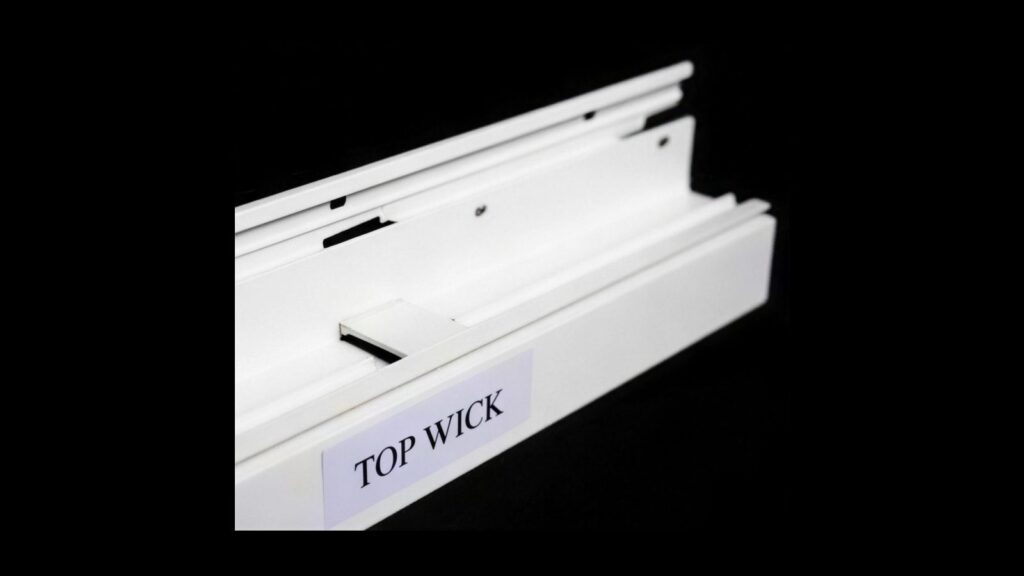
The head of the window matters too. Water that runs down the wall above the window needs a way out at the top of the frame. Our windows use a patent-pending top wick and weep system to manage water at the head.
Do all windows have weep holes?
Most sliding and hung windows in vinyl, aluminum and fiberglass do, because their sill tracks collect water. Some fixed windows and casements drain differently, through internal channels or the glazing pocket, and may have weeps that are smaller or harder to see. If you can’t find them, check the manufacturer’s installation instructions before you trim or seal anything around the sill.
Why weep holes clog on jobsites
A new window’s weeps are clear when it leaves the plant. On multifamily projects, they get blocked during the trades that follow:
- Sealant run across the bottom of the frame by a crew that treats the weeps as a gap to close.
- Stucco, mortar or siding installed tight to the sill with no clearance below the weeps.
- Paint and primer sprayed over the bottom of the frame, sealing the flaps shut.
- Tape or protective film left over the weeps after masking.
- Construction dust and debris packed into the sill track before turnover.
Any one of these turns a window that would pass into one that fails. On field water tests, a blocked weep can make the window look like it’s leaking when the real problem is that the water it was designed to drain can’t get out.
Never seal window weep holes
It’s tempting to caulk weep holes when you see water near them. Don’t. Sealing a weep doesn’t stop water from getting into the track. It just traps it there until it overflows onto the interior sill or into the rough opening. If insects or wind noise are a concern, use the manufacturer’s weep covers rather than sealant, tape or screen.
If water is coming out of the weep holes, they’re working. If water is building up in the track and not coming out, something is blocking them.
Weep hole checklist before the water test
- Look at every weep from the outside. Nothing should cover the openings or the flaps.
- Check clearance below the sill. Stucco, siding and trim should stop short of the weeps per the cladding and window instructions.
- Clean the sill track. Vacuum out dust, screws and drywall debris.
- Pour a cup of water into the track. It should drain out the exterior weeps within a minute or two.
- Clear any blockage gently with a thin plastic tool or a pipe cleaner. Don’t drill new weeps or enlarge existing ones.
- Brief the paint and sealant crews before they start, so the weeps stay clear through turnover.

How our windows handle drainage
Our water management details work together so the window drains the way it was designed to and your field water tests pass:
- Patented Super Wick channels water away from the sill.
- Patented Super Shim keeps the unit level and aligned, so water runs to the weeps instead of pooling at a low corner.
- Additional weep holes on the 2100 Series for enhanced drainage in heavy rain.
- Patent-pending top wick and weep system at the head.
See how each piece works on our water management page.
Frequently asked questions
Can you cover a weep hole?
Only with a weep cover made for the purpose, which opens to let water out and closes against wind and insects. Don’t cover weeps with sealant, tape, paint or screen.
Do I need weep holes?
Yes, on any window whose sill track collects water. They’re how the window gets rid of the water that gets past the exterior seals.
Do all exterior windows have weep holes?
Most sliding and hung windows do. Some fixed windows and casements drain through internal channels instead. Check the manufacturer’s instructions if you can’t find them.
What happens if water gets in weep holes?
That’s normal. Water in the weeps is water on its way out. The problem is water that collects in the track and can’t drain.
Is it okay to seal window weep holes?
No. Sealing weeps traps water in the track until it overflows into the building, and it can cause a window to fail a field water test.
What should I do if weep holes are not draining?
Clean the sill track, then clear the weeps gently with a thin plastic tool or pipe cleaner and test with a cup of water. If they still don’t drain, check for sealant, paint or cladding covering them from the outside.
Windows that drain by design
All American Window Company designs and manufactures windows for multifamily construction in North Charleston, South Carolina, with water management built into the frame. See the 2100 Series, then send us your window schedule for pricing and lead times.